Article
How Does Tipping Work in the USA? A Complete Guide
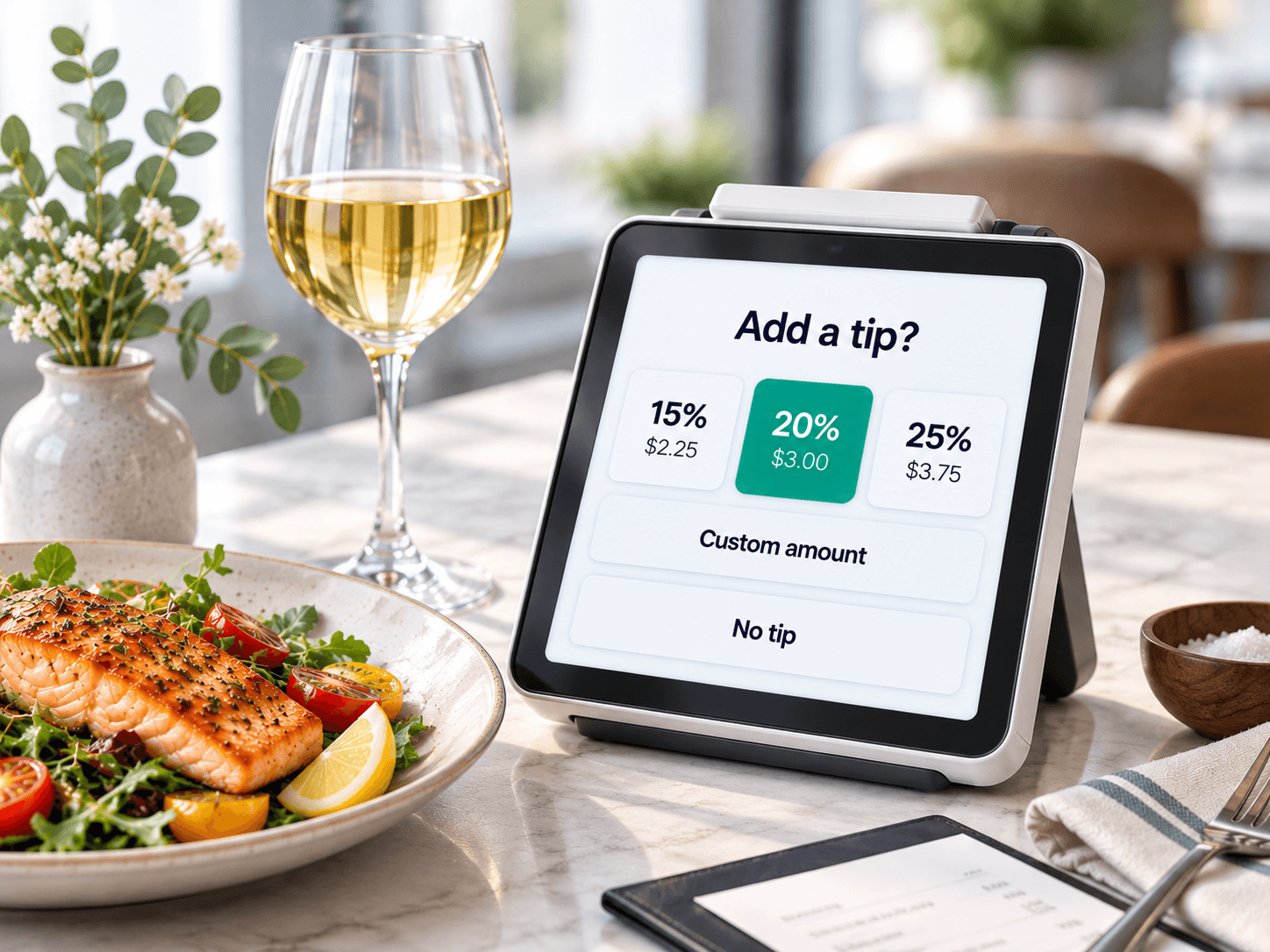
Restaurant checks often confuse newcomers with calculated percentage suggestions right next to empty lines. Hotels and salons bring their own tipping decisions. Food delivery services and drivers prompt for tips during final transaction processing. Our tipping in the USA guide focuses on situations visitors commonly face. It also explains what happens to a tip after payment.
What Counts as a Tip in the USA?
Diners hold total control over tip decisions and dollar amounts. Business service charges work differently and appear on checks as mandatory line items. Federal law places required fees in a separate tax category from tips.
A large-party bill makes the difference easy to see. A restaurant may add 18% automatically. An automatic charge stays a service charge. Guests can still add something extra, and that voluntary amount can count as a tip. Suggested percentages remain optional guidance whenever customers edit figures or enter zero.
Who Actually Gets Your Tip?
Most customers pay without following the exact money flow. The money may stay with one worker or go into a valid tip pool. Federal law bars employers from keeping employees' tips. Managers and supervisors also face limits on receiving pooled tips. Workers who qualify for the pool may receive a share of collected tips.
How Federal and State Wage Rules Affect Tips
Federal rules let businesses pay tipped staff $2.13 in direct hourly cash. Customer tips supply up to $5.12 toward the $7.25 federal baseline. Whenever tip income remains under that threshold, the owner covers the remaining balance.
State law can require much higher direct pay before tips. California requires $16.90 per hour in 2026 before tips.
Washington requires $17.13, with tips added on top of that wage. Oregon also requires full minimum wage before tips, using regional rates from $14.55 to $16.80. Florida uses a different setup. From September 30, 2026, Florida’s minimum wage is $15.00 per hour. Tipped employees must receive at least $11.98 directly from the employer. Some other states still allow employers to use a tip credit.
Why Do Americans Tip?
Tipping has been a US service custom for generations. Wage rules later gave customer tips a direct role in some workers’ pay. Since 1966, federal law has allowed qualifying employers to count tips toward minimum wage. States can set higher direct wages, and many already do. For many service jobs, tipping therefore remains both a social custom and a source of income.
Typical Tip Amounts in the USA
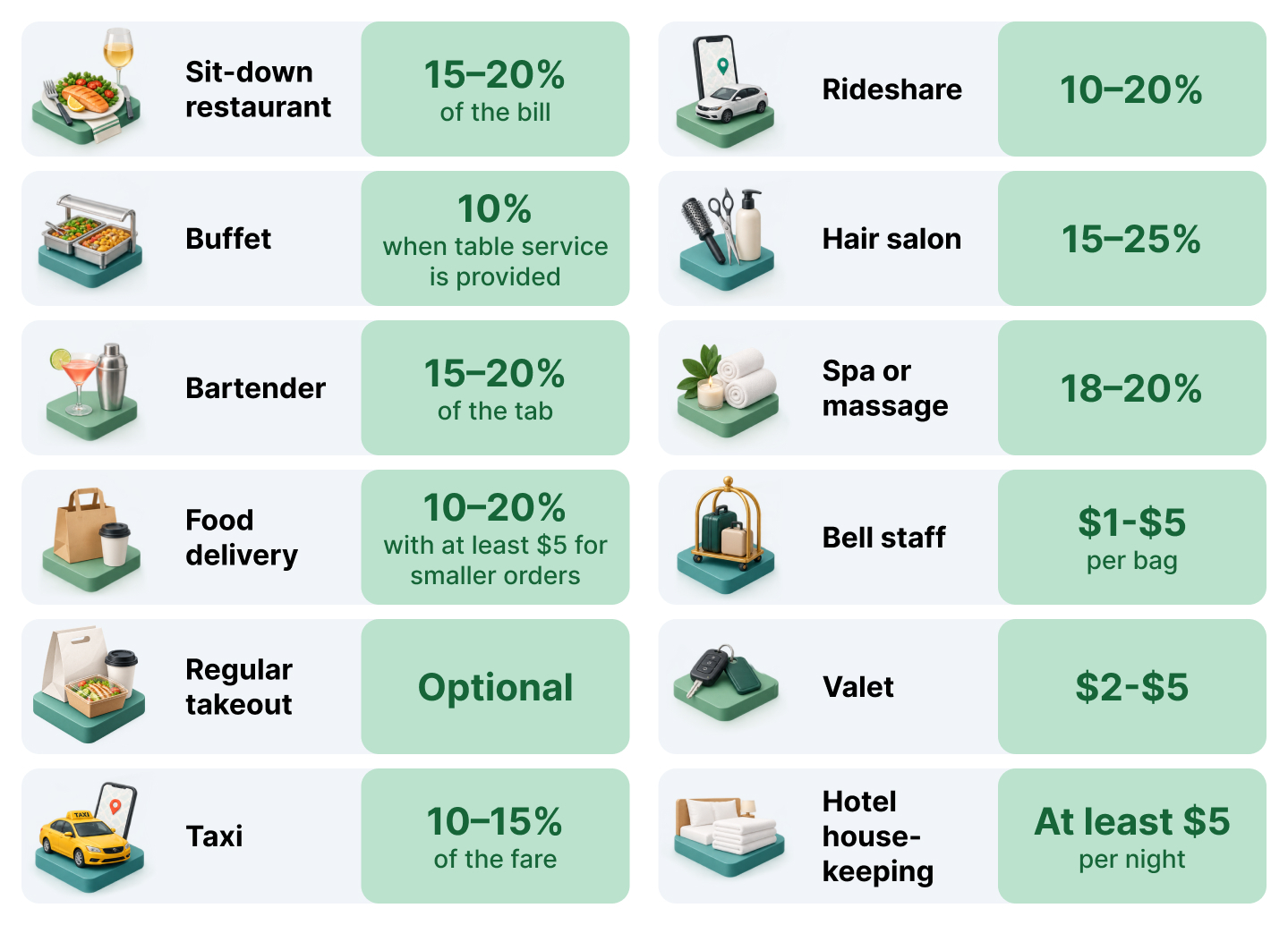
There is no single percentage for every service in the US. Restaurant guests tip percentages on total bills. Hotel visitors hand out small cash sums per stay. Delivery and salon tips follow different rates. The table gives a quick view of acceptable tips in the USA for everyday services. These typical tip amounts cover the situations travelers see most often.
How to Tip in the USA: When and How to Pay
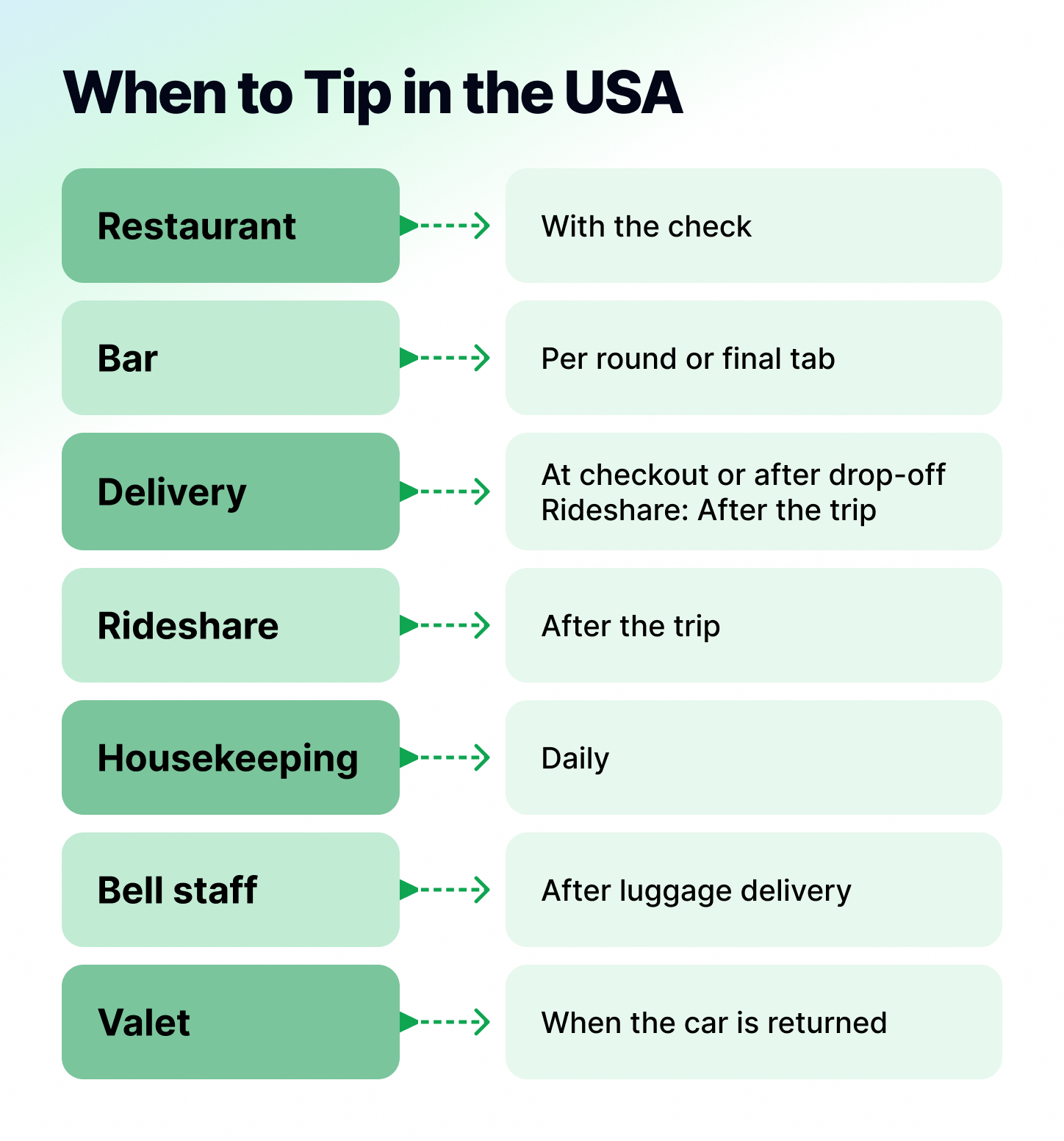
Here are the most common times Americans leave a tip:
- Restaurant — with the check, on the receipt or card terminal.
- Bar — per round or on the final tab.
- Delivery — at checkout or after drop-off, depending on the app.
- Rideshare — after the trip ends.
For travelers giving tips in USA hotels, cash is common. Housekeeping tips are best left each day because room attendants may change. Bell staff usually receive the tip after bringing luggage to your room. Valets are generally tipped when they return the car. Some hotels also offer QR codes or tipping through their app.
How to Tip With a Credit or Debit Card
Restaurants use two common setups for card tips. Some give you a printed receipt with spaces for the tip and final total. Others use a terminal that shows suggested percentages on screen. You can tap a suggested amount or type in a different figure. Check for an automatic gratuity or service charge before entering anything extra.
Tipping on a Paper Receipt
Card payments often end with a paper receipt left at your table. You’ll usually see one line for the tip and another for the final total. Fill in the tip amount, math out the total, and drop a quick signature if needed. Your bank may first show the pre-tip authorization. The final charge can update later to include the tip.
Tipping on a Payment Terminal
Before the card payment goes through, the terminal may ask about a tip. Several preset percentages can appear on screen, along with a field for another amount. A zero option means you can skip the tip. If the screen requires a gratuity above zero, the IRS may treat the payment as a service charge for tax purposes.
What Happens to a Card Tip?
A worker may receive slightly less than the amount you leave by card. If the restaurant pays a 3% processing fee, federal law allows it to deduct the tip’s share of that fee. On a $20 tip, that would be 60 cents. The deduction cannot bring the worker’s pay below minimum wage, and some states prohibit it entirely. Card tips first pass through business payroll systems before reaching staff. Federal law forces employers to pay out these funds on regular paydays regardless of credit card processing delays.
Are Tips Taxed in the USA?
Federal regulations keep tips taxed as standard income regardless of format—cash, card transactions, or pool distributions. Reaching $20 or more in monthly tips at one job requires workers to submit that total directly to management. If monthly tips from that employer stay below $20, no employer report is required. The money still goes on the worker’s federal tax return. The $20 threshold only changes the employer-reporting step.
What “No Tax on Tips” Means in 2026
The 2026 rule is narrower than the phrase “no tax on tips” suggests. Qualifying workers may deduct up to $25,000 in qualified tips. The deduction starts shrinking above $150,000 in modified adjusted gross income. For joint filers, the phaseout begins at $300,000. Married taxpayers must file jointly to claim it. Tip income still has to be reported, and payroll taxes can still apply.
How Service Charges Are Taxed
An automatic 18% fee on a large-party bill is a service charge. The restaurant sets that amount in advance. If employees receive the money, the IRS counts it as wages. Payroll taxes can apply to that payment. Guests may still leave an extra amount voluntarily. So that extra payment can qualify as a tip.
When Is It Okay Not to Tip?
Counter service is one place where skipping a tip is usually fine. Coffee shops and takeout counters may still show percentage buttons on screen. The tip screen is still optional when customers only order at the counter. Retail checkouts can show the same kind of tip screen. Poor service can also affect the amount you decide to leave.
What to Remember About Tipping in the USA
If we had to keep one habit, we’d check the bill before choosing a tip. Checking receipts catches pre-added fees and helps avoid double tipping. After that, base the amount on the quality of the service you received.
References:
- https://www.dol.gov/agencies/whd/fact-sheets/15-tipped-employees-flsa
- https://www.irs.gov/businesses/small-businesses-self-employed/tip-recordkeeping-and-reporting
- https://www.dol.gov/agencies/whd/state/minimum-wage/tipped
- https://cluballiance.aaa.com/the-extra-mile/advice/life/tipping-etiquette-a-guide-to-gratuity
- https://cluballiance.aaa.com/the-extra-mile/advice/travel/how-much-to-tip-in-hotels
- https://cluballiance.aaa.com/travel/tipping-etiquette
- https://mwg.aaa.com/via/travel-tips/how-much-should-you-tip-around-world
- https://usa.visa.com/dam/VCOM/global/support-legal/documents/chip-payment-acceptance-restaurant-merchants.pdf
- https://www.irs.gov/businesses/small-businesses-self-employed/tip-recordkeeping-and-reporting
- https://www.irs.gov/taxtopics/tc761
- https://www.irs.gov/irb/2026-18_IRB
- https://floridajobs.org/florida-minimum-wage